



Helpful Score: 3
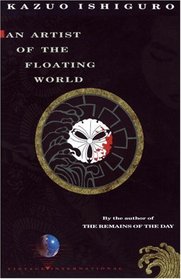
Very well written. Ishiguro's first novel. "An Artist of the Floating World" (1986) explores Japanese national attitudes to the Second World War through the story of former artist Masuji Ono, haunted by his military past. It won the Whitbread Book of the Year award and was shortlisted for the Booker Prize for Fiction."
Set initially in late 1940's Japan, the older artist's larger story is revealed gradually through flashbacks to his younger glory days in pre-war Japan. Depending on your reading taste Ishiguro's style is either nuanced and purposeful, or "slow". If you like period literature, Ishiguro's precise focus on relationships and character should appeal to you. Conveys a great deal in only 200 pages.
"Kazuo Ishiguro was born in Nagasaki, Japan, on 8 November 1954. He came to Britain in 1960 and was educated at a grammar school for boys in Surrey."
Set initially in late 1940's Japan, the older artist's larger story is revealed gradually through flashbacks to his younger glory days in pre-war Japan. Depending on your reading taste Ishiguro's style is either nuanced and purposeful, or "slow". If you like period literature, Ishiguro's precise focus on relationships and character should appeal to you. Conveys a great deal in only 200 pages.
"Kazuo Ishiguro was born in Nagasaki, Japan, on 8 November 1954. He came to Britain in 1960 and was educated at a grammar school for boys in Surrey."

Helpful Score: 2
First off, if you've never read Ishiguro before, I highly recommend you put this book on your "To Read" list AFTER reading "The Remains of the Day". It's Ishiguro at his best, in my opinion. This and "Never Let Me Go", however, are still great novels. Like the others, this book explores themes of dignity, loss, and the power of memory (however slective it may be) all from the perspective of a seriously flawed protagonist. The narrator is, like Stevens in "Remains of the Day", very unreliable and his memories and anecdotes are highly subjective. It serves the flow of the story in a good way, as the narrator, Ono, lives in postwar Japan, where people are judged heavily for their past. Unlike the other two Ishiguro books I've read, this one really explores relationships between men and women as well as between generations. And, like other Ishiguro books, this isn't a story so much as it is a situation. Like my mom explained Ishiguro's works, "Nothing happens, yet EVERYTHING happens." This book is perfectly paced, and the characters are well balanced so that I don't have to go back through the book to figure out who he's talking about (I hate doing that!). Good book club kinda book.
