"Book tours and research provide a lot of travel - too much, I sometimes think, but we do take vacations." -- Bernard Cornwell
Bernard Cornwell OBE (born 23 February 1944) is an English author of historical novels. He is best known for his novels about Napoleonic Wars rifleman Richard Sharpe which were adapted into a series of Sharpe television films.
"Agents will read unpublished work because they might make money, and that's their job. It isn't mine.""And yes, there's a simplicity to writing books because you're not a member of a team, so you make all the decisions yourself instead of deferring to a committee.""Anyone who claims to have an entirely clear conscience is almost certainly a bore.""At risk of sounding foully pompous I think that writers' groups are probably very useful at the beginning of a writing career.""I know nothing about producing TV drama and any involvement on my part is liable to prove an obstacle to the producers, so I prefer to be a cheerleader and let them get on with it.""I sometimes wonder what would have happened if the first book had not sold... doesn't bear thinking about, but I suppose we'd have made it work somehow.""I volunteered for this life, wanted it and am not going to bitch about it now that I've got it.""I'll happily mentor anyone who wants mentoring, and most of that goes on by internet rather than face to face.""I'm fortunate that the books sell, but even more fortunate to live in Chatham, to be very happily married and to have, on the whole, a fairly clear conscience.""It's fun. I sit down every day and tell stories. Some folk would kill to get that chance.""Judy couldn't move to Britain for family reasons, so I had to come to the States, and the U.S. government wouldn't give me a Green Card, so I airily told her I'd write a book.""Looking back, of course, it was irresponsible, mad, forlorn, idiotic, but if you don't take chances then you'll never have a winning hand, and I've no regrets.""Of course some days are easier than others, but my worst day is better than being in most humdrum occupations.""One book at a time... though I'm usually doing the research for others while I'm writing, but that sort of research is fairly desultory and I like to stick to the book being written - and writing a book concentrates the mind so the research is more productive.""So far it's 43 books in 25 years.""So the books have a greater appeal to a British audience, but that hasn't stopped them making best-seller lists in places like Brazil, Japan and at least a dozen other countries.""Television is a young person's medium.""Then you start another book and suddenly the galley proofs of the last one come in and you have to wrench your attention away from what you're writing and try to remember what you were thinking when you wrote the previous one.""What I mean by that is that the point of life, as I see it, is not to write books or scale mountains or sail oceans, but to achieve happiness, and preferably an unselfish happiness.""Writing is a solitary occupation."
Cornwell was born in London in 1944. His father was a Canadian airman, and his mother was English, a member of the Women's Auxiliary Air Force. He was adopted and brought up in Thundersley, Essex by the Wiggins family, who were members of the Peculiar People, a strict sect who were pacifists, banned frivolity of all kinds and even medicine. After he left them, he changed his name to his mother's maiden name, Cornwell.
Cornwell was sent away to Monkton Combe School. He attended the University of London, and after graduating, worked as a teacher. He attempted to enlist in the British armed services at least three times, but was rejected on the grounds of myopia.
He then joined the BBC's Nationwide and was promoted to become head of current affairs at BBC Northern Ireland. He then joined Thames Television as editor of Thames News. He relocated to the United States in 1980 after marrying an American. Unable to get a green Card, he started writing novels, as this did not require a work permit. He later became a U.S. citizen.
As a child, Cornwell loved the novels of C. S. Forester, chronicling the adventures of fictional British naval officer Horatio Hornblower during the Napoleonic Wars, and was surprised to find that there were no such novels following Lord Wellington's campaign on land. Motivated by the need to support himself in the U.S. through writing, Cornwell decided to write such a series. He named his chief protagonist Richard Sharpe, a rifleman involved in most of the major battles of the Peninsular War.
Cornwell wanted to start the series with the Siege of Badajoz but decided instead to start with a couple of "warm-up" novels. These were Sharpe's Eagle and Sharpe's Gold, both published in 1981. Sharpe's Eagle was picked up by a publisher, and Cornwell got a three-book deal. He went on to tell the story of Badajoz in his third Sharpe novel Sharpe's Company published in 1982.
Cornwell and wife Judy co-wrote a series of novels, published under the pseudonym "Susannah Kells". These were A Crowning Mercy, published in 1983, Fallen Angels in 1984, and Coat of Arms (aka The Aristocrats) in 1986. (Cornwell's strict Protestant upbringing informed the background of A Crowning Mercy, which took place during the English Civil War.) He also published Redcoat, an American Revolutionary War novel set in Philadelphia during its 1777 occupation by the British, in 1987.
After publishing 8 books in his ongoing Sharpe series, Cornwell was approached by a production company interested in adapting them for television. The producers asked him to write a prequel to give them a starting point to the series. They also requested that the story feature a large role for Spanish characters to secure co-funding from Spain. The result was Sharpe’s Rifles, published in 1987 and a series of Sharpe television films starring Sean Bean.
A series of contemporary thrillers with sailing as a background and common themes followed: Wildtrack published in 1988, Sea Lord (aka Killer's Wake) in 1989, Crackdown in 1990, Stormchild in 1991, and a political thriller called Scoundrel in 1992.
In June 2006, Cornwell was made an Officer of the Order of the British Empire in the Queen's 80th Birthday Honours List.
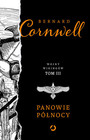
Azincourt was released in the UK in October 2008. The protagonist is an archer who participates in the Battle of Agincourt, a devastating defeat suffered by the French during the Hundred Years War. His most recent book has been The Burning Land released in 2009, another of the five Saxon Stories centering around the protagonist Uhtred of Bebbanburg.
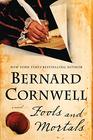
September 2010 has been scheduled for the release of his latest novel, The Fort. Set in the summer of 1779, it follows a British force of fewer than a thousand Scottish infantry backed by three sloops-of-war, which were sent to what is now Castine in the State of Maine. The War of Independence was in its third year and the Scots were the only British troops between Canada and New York. Their orders were to make a garrison that could serve as a safe haven and a naval base. The State of Massachusetts was determined to expel the British and sent a fleet of forty vessels and some one thousand infantrymen to 'captivate, kill or destroy' the invaders.
Cornwell's best known books feature the adventures of Richard Sharpe, an English soldier during the Napoleonic Wars.
The first 11 books of the Sharpe series (beginning in chronological order with Sharpe's Rifles and ending with Sharpe's Waterloo, published in the US as Waterloo) detail Sharpe's adventures in various Peninsular War campaigns over the course of 6—7 years. Subsequently, Cornwell wrote a prequel quintology — Sharpe's Tiger, Sharpe's Triumph, Sharpe's Fortress, Sharpe's Trafalgar and Sharpe's Prey — depicting Sharpe's adventures under Wellington's command in India, including his hard-won promotion to the officer corps, his return to England and his arrival in the 95th Rifles.
He also wrote Sharpe's Battle, a novel "inserted" into his previous continuity, taking place during the Battle of Fuentes de Oņoro. It has been alleged that Cornwell was initially dubious about the casting of Sean Bean for the television adaptations, but if this is true the doubts did not last as he was subsequently so delighted that he dedicated Sharpe's Battle to him, and has admitted that he subtly changed the writing of the character to align with Bean's portrayal. Since 2003, he has written further "missing adventures" set during the "classic" Peninsular War era.
The following is the correct 'historical' order, although they are all stand alone stories:
Sharpe's Tiger: Richard Sharpe and the Siege of Seringapatam, 1799
Sharpe's Triumph: Richard Sharpe and the Battle of Assaye, September 1803
Sharpe's Fortress: Richard Sharpe and the Siege of Gawilghur, December 1803
Sharpe's Trafalgar: Richard Sharpe and the Battle of Trafalgar, October 1805
Sharpe's Prey: Richard Sharpe and the Expedition to Copenhagen, 1807
Sharpe's Rifles: Richard Sharpe and the French Invasion of Galicia, January 1809
Sharpe's Havoc: Richard Sharpe and the Campaign in Northern Portugal, Spring 1809
Sharpe's Eagle: Richard Sharpe and the Talavera Campaign, July 1809
Sharpe's Gold: Richard Sharpe and the Destruction of Almeida, August 1810
Sharpe's Escape: Richard Sharpe and the Bussaco Campaign, 1810
Sharpe's Fury: Richard Sharpe & the Battle of Barrosa, March 1811
Sharpe's Battle: Richard Sharpe and the Battle of Fuentes de Oņoro, May 1811
Sharpe's Company: The Siege of Badajoz, January to April 1812
Sharpe's Sword: Richard Sharpe and the Salamanca Campaign, June and July 1812
Sharpe's Skirmish: Richard Sharpe and the defence of the Tormes, August 1812 (short story)
Sharpe's Enemy: Richard Sharpe and the Defense of Portugal, Christmas 1812
Sharpe's Honour: Richard Sharpe and the Vitoria Campaign, February to June 1813
Sharpe's Regiment: Richard Sharpe and the Invasion of France, June to November 1813
Sharpe's Christmas, 1813 (short story)
Sharpe's Siege: Richard Sharpe and the Winter Campaign, 1814
Sharpe's Revenge: Richard Sharpe and the Peace of 1814
Sharpe's Waterloo: Richard Sharpe and the Waterloo Campaign, 15 to 18 June 1815
Sharpe's Ransom, 181? (short story, appears in Sharpe's Christmas)
Sharpe's Devil: Richard Sharpe and the Emperor, 1820—21
The Starbuck Chronicles
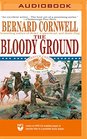
A tetralogy set during the American Civil War. The title character, Nathaniel Starbuck, is a Northerner who has decided to fight for the South in a Virginian regiment, the Faulconer Legion. The last novel to date in the series has been The Bloody Ground, taking place during the Antietam Campaign. Cornwell has said that he plans to write more Starbuck novels, but has not done so yet.
Rebel
Copperhead
Battle Flag
The Bloody Ground
The Warlord Chronicles
A trilogy depicting Cornwell's historical re-creation of Arthurian Britain. The series posits that Post-Roman Britain was a difficult time for the native Britons, being threatened by invasion from the Anglo-Saxons in the East and raids from the Irish in the West. At the same time, they suffered internal power struggles between their petty kingdoms and friction between the old Druidic religion and newly-arrived Christianity.
The Winter King
Enemy of God
A Novel of Arthur
The Grail Quest novels
A trilogy that deals with a mid-14th century search for the Holy Grail during the Hundred Years' War. An English archer, Thomas of Hookton, becomes drawn into the quest by the actions of a mercenary soldier called "The Harlequin," who murders Thomas's family in his own obsessive search for the Grail. Cornwell was planning at one point to write more books about the main character Thomas of Hookton and said that shortly after finishing Heretic he had "... started another Thomas of Hookton book, then stopped it — mainly because I felt that his story ended in Heretic and I was just trying to get too much from him. Which doesn't mean I won't pick the idea up again sometime in the future."
Harlequin (published in the USA under the title The Archer's Tale)
Vagabond
Heretic
The Saxon Stories
Cornwell's latest series focuses on the Anglo-Saxon kingdom of Wessex, England during the 9th-century reign of Alfred the Great, his fierce opposition to the Danes (Vikings), and his determination to unite England as one country. According to Cornwell's replies on his website bulletin board, the series will not be a trilogy like his medieval works, but will have 3 or 4 more sequels: "I'm not sure how many there will be — perhaps seven? maybe eight?"
The latest in the series, titled The Burning Land, was released in Britain on 1 October 2009 and in the United States in January 2010.
The Last Kingdom
The Pale Horseman
The Lords of the North
Sword Song
The Burning Land
The Thrillers
Cornwell's thriller series are modern mysteries, all with sailing themes. He is a traditional sailor and enjoys sailing his Cornish Crabber by the name of "Royalist." His thorough knowledge of sailing and popular skills with writing combine in great novels for the nautically obsessed. According to Cornwell's website, there may be no additions to the series: "I enjoyed writing the thrillers, but suspect I am happier writing historical novels. I'm always delighted when people want more of the sailing books, but I'm not planning on writing any more, at least not now - but who knows? perhaps when I retire."