



Helpful Score: 12
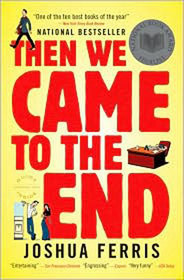
âThen We Came to the Endâ by Joshua Ferris is part the movie âOffice Space,â part the sitcom âThe Officeâ and all a little too close to home for many office workers, including myself. Ferris is dead-on with his retelling of office life, from the gossips, to the style maven; from the strange older man, to the arm's-length boss.
This book could be taken as a fly-on-the-wall writing exercise, as Ferris places his readers right in the middle of the action for the entire book. Told in the omnipresent âweâ voice, the reader feels as if he could be the narrator, or one of the office workers mentioned or perhaps an office worker who hovers in the background all the time who escapes the other workers' scathing judgments.
As witnessed in many offices, afternoons are spent trying not to fall asleep from the lunch the workers just ate. Also, you don't want to get too much work done and make your fellow co-workers look lazy, but you also don't want to appear to be a slacker.
Ferris' office gets turned on its head when the downsizing begins. No one wants to make the dreaded escorted walk to the elevator with only a file-size cardboard box filled with your personal belongings as evidence that you did indeed work there. No one wants to be the one to make uncomfortable banter with the just-laid-off co-worker at the bar after work where everyone gathers to say goodbye to the latest downsizing victim.
And no one wants to see what will happen when the wrong person gets laid off on the wrong day.
âThen We Came to the Endâ is an engaging page-turner of a book that is sure to entertain anyone who has ever held, not just an office job, but ANY job. Its biting wit and sarcastic observation might just make you grateful for the office you currently work in.
This book could be taken as a fly-on-the-wall writing exercise, as Ferris places his readers right in the middle of the action for the entire book. Told in the omnipresent âweâ voice, the reader feels as if he could be the narrator, or one of the office workers mentioned or perhaps an office worker who hovers in the background all the time who escapes the other workers' scathing judgments.
As witnessed in many offices, afternoons are spent trying not to fall asleep from the lunch the workers just ate. Also, you don't want to get too much work done and make your fellow co-workers look lazy, but you also don't want to appear to be a slacker.
Ferris' office gets turned on its head when the downsizing begins. No one wants to make the dreaded escorted walk to the elevator with only a file-size cardboard box filled with your personal belongings as evidence that you did indeed work there. No one wants to be the one to make uncomfortable banter with the just-laid-off co-worker at the bar after work where everyone gathers to say goodbye to the latest downsizing victim.
And no one wants to see what will happen when the wrong person gets laid off on the wrong day.
âThen We Came to the Endâ is an engaging page-turner of a book that is sure to entertain anyone who has ever held, not just an office job, but ANY job. Its biting wit and sarcastic observation might just make you grateful for the office you currently work in.

Helpful Score: 9
this book had so much hype around it, best book of the year, EW gave it top ratings, so i had high hopes for a fun office-type read... I just did not love it. i suffered through, thinking perhaps it had some nice twist at the end or something, but no, just pretty blah. i was glad when we came to the end...
Helpful Score: 8
A lot of critics loved this book, and Entertainment Weekly said it was hilarious and a good choice for anyone who was jonesing for "The Office" (this was during the writers' strike). Wow, I really don't agree.
"Then We Came to the End" is satire -- in other words, either the whole thing is funny to you, or it's not. There are no jokes, clever wordplay, or other comedy elements. That's OK -- satire is a legitimate form of humor; but this one was decidedly not funny to me.
Also, the second-person plural voice used in the novel ("We did this, we did that") was really jarring for me. I just plain did not like this book.
"Then We Came to the End" is satire -- in other words, either the whole thing is funny to you, or it's not. There are no jokes, clever wordplay, or other comedy elements. That's OK -- satire is a legitimate form of humor; but this one was decidedly not funny to me.
Also, the second-person plural voice used in the novel ("We did this, we did that") was really jarring for me. I just plain did not like this book.
Helpful Score: 4
Glorious and creative look at what happens when it all starts to crumble. Fantastic characters and a situation that is so real that it seems bizarre. Sadly - those of us that have worked anywhere with more than 10 employees will be able to identify ourselves and former co-workers among the characters. If you are or have worked with "creatives" it's a must read.
Helpful Score: 3
Then We Came to the End explores the relationships of people trying to keep above the increasing boredom of a high-powered world of marketing along the Magnificent Mile in downtown Chicago. The reader is immediately swept into this chaotic office environment and introduced to employees and employers in a sporadic fashion as the plot twists and turns through time; there is no linear progression of people or events as this tale unfolds. Through the unique perspective of a collective "we", Joshua Ferris illustrates how universal office life is across the country. The people he portrays can be in any office in any city and prototypes of these people are everywhere as this office is a paradigm of trends around the country. Many of these employees are from the same mold and seem almost interchangeable with each other as they state "[m]ost of us liked most everyone, a few of us hated specific individuals, one or two people loved everyone and everything". The reader follows the lives of these employees as they deal with strange coworkers, the kidnapping of a daughter, divorce, and unexpected pregnancy. We see these employees navigate through a less than wholesome office environment as major layoffs are occurring.
This work of fiction can be a bit tedious as the story jumps from one time period to another. Ferris chooses to reveal plot points in a slightly confusing manner exemplified in the character of Tom who, very early on, loses his job but keeps being pulled into the story as previous time periods are being described. The reader finds that past events are being described as if they are happening in the present. Are you confused yet?
The collective perspective of all the employees at once does drive home the essence of this monochromatic and universal office life, but in doing so, it does not allow the reader to empathize with the interchangeable protagonist. By creating this strange perspective, Joshua Ferris makes a clear statement about office life at the expense of understanding the employees themselves. The reader can never begin to understand the individuals in this work because we never see them as individuals, but as units of a whole that happen to act differently at times. An employee, Jeannine becomes the focus of the collective when she deals with the loss of her child in a strange manner. The reader, however, only sees the reaction of the collective and can only understand Jeannine through reactions of that collective.
In spite of some issues with this work, Joshua Ferris paints this mundane portrait in such a satirical and humorous way that the reader can't help but laugh and relate to many of the plot twists and descriptions. Then We Came to the End is an intriguing look into the fictional world of office life and Joshua Ferris does an excellent job of portraying this harrowing life. Readers can fully relate to the antics of employees and laugh at the dead-on descriptions of offices across the country.
This work of fiction can be a bit tedious as the story jumps from one time period to another. Ferris chooses to reveal plot points in a slightly confusing manner exemplified in the character of Tom who, very early on, loses his job but keeps being pulled into the story as previous time periods are being described. The reader finds that past events are being described as if they are happening in the present. Are you confused yet?
The collective perspective of all the employees at once does drive home the essence of this monochromatic and universal office life, but in doing so, it does not allow the reader to empathize with the interchangeable protagonist. By creating this strange perspective, Joshua Ferris makes a clear statement about office life at the expense of understanding the employees themselves. The reader can never begin to understand the individuals in this work because we never see them as individuals, but as units of a whole that happen to act differently at times. An employee, Jeannine becomes the focus of the collective when she deals with the loss of her child in a strange manner. The reader, however, only sees the reaction of the collective and can only understand Jeannine through reactions of that collective.
In spite of some issues with this work, Joshua Ferris paints this mundane portrait in such a satirical and humorous way that the reader can't help but laugh and relate to many of the plot twists and descriptions. Then We Came to the End is an intriguing look into the fictional world of office life and Joshua Ferris does an excellent job of portraying this harrowing life. Readers can fully relate to the antics of employees and laugh at the dead-on descriptions of offices across the country.


