


 Mark J. (CrazyaboutFantasy) -
Helpful Score: 8
I liked this book. Having said that, I almost quit reading it about half-way through. Although he has women in combat, there is a sexualization of women that made me uncomfortable. And the homophobia just pissed me off. Like I said, I was ready to ditch it, which is unusual for me. If I can make it past the first chapter or two I usually finish. I went back and reread a couple of PBS members reviews and decided to tough it out. I am glad I did. Even though some of his language concerning the interaction between sexes and his portrayal of homosexuals is somewhat dated, he was way ahead of time. I was wrong to label him as sexist and homophobic by today's context. The book was first published in 1972. For his time, he was quite enlightened. It turned out to be a great story. A great anti-war story. I hear a movie is being made. They'll screw it up.
 Patrick C. (MeadowbrookManor) -
Helpful Score: 3
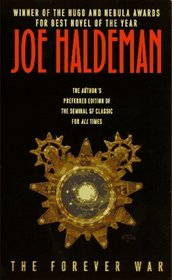
Starts a little slow, and is at first quite reminiscent of Starship Trooper (the book, not the horrible movie). The pace picks up about halfway through, and while it is ostensibly about a confusing war with an ill-understood enemy, the real story is about humanity and it's evolution (or lack thereof). Depressing as hell, but with a few rays of hope scattered in for good measure. Won both the Hugo and Nebula awards for "Best Novel of the Year".
Good read!
Good read!
Helpful Score: 2
This is a good one. He's a warrior, reluctant, but good at it nevertheless. Thanks to Relativity, he gets way out of synch with those he takes into battle. It's a good read.
Helpful Score: 1
John Scalzi the author of "Old Mans War" writes an open letter to Joe Haldeman in this edition of "The Forever War" in which he gives praise for this book and says its better than his book. I have to disagree I think the ''Old Mans War" is by far the better book.

Helpful Score: 1
A must-read classic from the golden age of SF. Haldeman redefines the concept of galactic war.


