



Helpful Score: 7
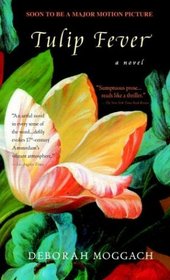
Tulip Fever has a little bit of everything: suspense, romance, and history. It's set against the background of the tulip frenzy of the 1630s. Amsterdam is stricken with the fever of tupilomania. People invest in bulbs, the bargain, they gamble, they sell everything--all for the glory of making more money.
I really enjoyed this book. I liked the format which has each chapter devoted to a different character. You get the story from different perspectives. It's somewhat like Tracy Chevalier's Lady and the Unicorn. In fact, if you enjoy Tracy Chevalier's writing, you will enjoy this as well.
This is a fascinating, fast paced historical fiction novel. I knocked it off in three days as I really wanted to know what would become of the characters.
I really enjoyed this book. I liked the format which has each chapter devoted to a different character. You get the story from different perspectives. It's somewhat like Tracy Chevalier's Lady and the Unicorn. In fact, if you enjoy Tracy Chevalier's writing, you will enjoy this as well.
This is a fascinating, fast paced historical fiction novel. I knocked it off in three days as I really wanted to know what would become of the characters.

Helpful Score: 2
This is one on my list as the best books I ever read!
The ending is GREAT!
The ending is GREAT!
Helpful Score: 1
Deborah Moggach's Tulip Fever is set during an interesting historical moment: 1636 Amsterdam. Ten years after the Dutch purchased Manhattan island, while Harvard College was being formed an ocean away, Amsterdam was in the midst of a tulip speculation bubble. Unfortunately, Tulip Fever mainly concerns itself with a melodramatic love story. When wealthy, heirless merchant Cornelis Sandvoort aimed at immortality by commissioning Jan van Loos to paint a portrait of himself and his young wife Sophia, little did he know he was inviting cuckoldry. Sophia and Jan fall in love and, along with Sophia's pregnant-out-of-wedlock maid Maria, devise a daring plan to be together. Unfortunately Love is offered as the only (insufficient) explanatory motivation of the main characters. The narration is a bit uneven, as each chapter focuses on a particular character or event such as "the painting" or "after the storm;" it is unclear why Sophia is the only first person narrator. This style leaves tulipomania as a mere background for a story which is being told rather than shown to the reader. Nonetheless, the ending is suspenseful as the plan is about to succeed or fail. However, those who enjoy historical romance or are interested in historical art fiction--Jan van Loo is an actual historical painter--might like Tulip Fever.

Helpful Score: 1
In the 1630s Amsterdam, a wealthy businessman is married to a beautiful, younger wife. He commissions an artist to paint their portrait. Predictably, the young wife falls in love with the young artist. There are some other twists and turns that are not predictable and there is some suspense about how the 2 young lovers are going to pull off their plans for the future; however I was not pulled into the story and could not get interested in the characters.
This is a love story with deceit and betrayal. There is very little character development, historical background or description of the tulip mania that has seized the country at this time.
This is a love story with deceit and betrayal. There is very little character development, historical background or description of the tulip mania that has seized the country at this time.


