



Helpful Score: 4
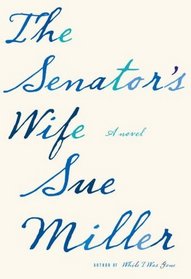
The Senator's wife is told from the two main characters: Meri, a young married transplant, and Delia, an older, wiser woman who is married to an ex senator, but living separately from him. The stories toggle back and forth between the two even recounting some of the same instances, and begins in 1993, and ends in present day, 2007. In my opinion, the novel starts off slow as the background is set, but picks up about halfway through. It is worth it to trudge along to get to the real story. This is the first book I have read by Sue Miller. I do not know if I will pick up any of her others, but I am glad I finished this book about imperfect marriages, and non traditional women who make their own paths.

Helpful Score: 3
This is a good read for mature women. Worth quoting: "She thought this might be the momentwhen the grown children swept in and irresistibly took over your life. When you could no longer say no, because it was so clear that all the things you thought of as belonging to you were in the process of becoming theirs - their possessions, and, of course, their heavy burdens, too: your life, your spouse's life, your illness, his illness, your death. The moment when you owed them something, when you had to give way, out of a kind of fairness to them; and then also because you just didn't have the strength left anymore to fight."
Helpful Score: 3
I enjoyed reading this book. It was an easy read. Without giving away the plot I did find the ending a bit disturbing.
Helpful Score: 3
I loved this book. The main character is real, familiar, and exotic at the same time. I was a little disappointed in the ending, but overall, this is one of the best books I have read in a long time.
Helpful Score: 2
It took me a while to get into this book. The first chapter introduces you to a somewhat dark, depressing character, some 4-letter words related to sex, and just generally read slow. I wasn't sure I was going to want to continue reading.
Then the story picks up, and the character seems to be coming into her own.
I enjoyed reading it for the most part, despite the fact that I didn't like how sex seemed to be on everyone's minds much of the time and some of the author's choice of words were uncouth and a bit offensive.
But I did enjoy the story as it developed and it held my interest throughout.
However....the culmination left me disturbed. That's all I will say so as not to spoil the ending if you are planning to read the book.
Then the story picks up, and the character seems to be coming into her own.
I enjoyed reading it for the most part, despite the fact that I didn't like how sex seemed to be on everyone's minds much of the time and some of the author's choice of words were uncouth and a bit offensive.
But I did enjoy the story as it developed and it held my interest throughout.
However....the culmination left me disturbed. That's all I will say so as not to spoil the ending if you are planning to read the book.


