Skip to main content
Swap Used Books - Buy New Books at Great Prices!
How To Swap Books
Sign Up
Search  Kiosk
Kiosk
All Books
PBS Market (New Books)
Book Browser
Advanced Search
Books Posted Today
Member Book Reviews
Award Winning Books
NYT Best Sellers
Amazon Best Sellers
Most Traveled Copies
Club Wish List
Login
Community
Discussion Forums
Book Lists
Blog
Donations
Box-O-Books
Maps
The Eclectic Pen
Fun Stuff
Top 100
Pulse of PBS
Spread The Word
Photo Gallery
Recipes
Club Tag Cloud
Member Testimonials
Help Center
Kiosk
PBS Market (New Books)
Go Shopping
Buy Credits
Buy PBS Money
Upgrade Membership
Gift Certificates
Transfer Credits

Search - List of Books by Anne Rice
"I enjoy the Web site a lot and I like being able to talk to my readers. I've always had a very close relationship with them." -- Anne Rice
Anne Rice (born Howard Allen O'Brien on October 4, 1941) is a best-selling American author of gothic, erotic, and religious-themed books from New Orleans, Louisiana. She was married to poet and painter Stan Rice for 41 years until his death from cancer in 2002. Her books have sold nearly 100 million copies, making her one of the most widely read authors in modern history. Anne Rice Goodreads | Anne Rice Author Anne Rice on Conversion | PreachingToday.com
Quotes more less
"Dickens is a very underrated writer at the moment. Everyone in his time admired him but I think right now he's not spoken of enough.""Evil is always possible. Goodness is a difficulty.""First-person narrators is the way I know how to write a book with the greatest power and chance of artistic success.""I broke with my religion in college.""I can't get very far away from Christianity, I can't get very far away from the angels and the saints. I work them in always, in some way.""I can't keep up with Stephen King's output.""I claim Dickens as a mentor. He's my teacher. He's one of my driving forces.""I do not read the ancient languages, but I am beginning to study Greek.""I do want to go another way - to write something completely different.""I feel like an outsider, and I always will feel like one. I've always felt that I wasn't a member of any particular group.""I gave up on the big screen. The Witching Hour was at Warner Bros. for 10 years and it just didn't work out.""I know nothing of God or the Devil. I have never seen a vision nor learned a secret that would damn or save my soul.""I love New Orleans physically. I love the trees and the balmy air and the beautiful days. I have a beautiful house here.""I loved words. I love to sing them and speak them and even now, I must admit, I have fallen into the joy of writing them.""I read The Old Curiosity Shop before I began Blackwood Farm. I was amazed at the utter madness in that book.""I thought The Shining was just absolutely wonderful. Stephen King reaches all kinds of people. In the beginning he was just dismissed out of hand, which was terrible.""I want to love all the children of God - Christian, Jew, Moslem, Hindu, Buddhist - everyone. I want to love gay Christians and straight Christians.""I was obsessed with religious questions, the basics: Why are we here? Why is the world so beautiful?""I wish we had more visible Christian and Catholic leaders who talked about love.""I'm always looking, and I'm always asking questions.""I'm definitely more influenced by European writers than I am by American writers, there's no doubt about that.""I'm fascinated by almost any mythology that I can get my hands on.""I'm going to keep on dealing with the supernatural in a lot of ways.""I'm usually working on my own mythology, my own realm of created characters. Stories in mythology inspire me, though I may not be conscious of it.""Invest in a feather duster - the possibilities are endless.""It is tragic that many in America think of us - Christians - as being people who hate others.""Memnoch the Devil happen to be my favorite of all The Vampire Chronicles.""My own funeral, I'd like to be laid out in a coffin in my own house. I would like my coffin to be put in the double parlor, and I would like all the flowers to be white.""Obsession led me to write. It's been that way with every book I've ever written. I become completely consumed by a theme, by characters, by a desire to meet a challenge.""Obviously, a writer can't know everything about what she writes. It's impossible.""People who cease to believe in God or goodness altogether still believe in the devil. I don't know why. No, I do indeed know why. Evil is always possible. And goodness is eternally difficult.""Re-telling the Christian story is the essence of my vocation. That has been going on since the Evangelists in one form or another.""Stephen King in many respects is a wonderful writer. He has made a contribution. People in the future will be able to pick up Stephen King's books and learn a lot about who we were by reading those books.""That process by which you become a writer is a pretty lonely one. We don't have a group apprenticeship like a violinist might training for an orchestra.""The most difficult novel I have had to write in terms of just getting it done was The Vampire Lestat. It took a year to write.""The only pain in pleasure is the pleasure of the pain.""The thing should have plot and character, beginning, middle and end. Arouse pity and then have a catharsis. Those were the best principles I was ever taught.""The vampires have always been metaphors for me. They've always been vehicles through which I can express things I have felt very, very deeply.""The whole theme of Interview with the Vampire was Louis's quest for meaning in a godless world. He searched to find the oldest existing immortal simply to ask, What is the meaning of what we are?""The world doesn't need any more mediocrity or hedged bets.""There may be writing groups where people meet but it's occasional. You really do it all at your own computer or your own typewriter by yourself.""To really ask is to open the door to the whirlwind. The answer may annihilate the question and the questioner.""To write something, you have to risk making a fool of yourself.""Very few beings really seek knowledge in this world. Mortal or immortal, few really ASK. On the contrary, they try to wring from the unknown the answers they have already shaped in their own minds.""We have to become saints. We have to become like Christ. Anything less is simply not enough.""We need to stop fighting Christian against Christian. I have no time for anything but trying to love other people. That is a full-time job.""We're frightened of what makes us different.""What I did was take the Jesus of the Gospels, the Son of God, the Son of the Virgin Mary, and sought to make Him utterly believable, a vital breathing character.""When I write something, every word of it is meant. I can't say it enough.""When you make his sandwiches, put a sexy or loving note in his lunch box.""Writers, as they gain success, feel like outsiders because writers don't come together in real groups.""You can look at the New York Times Bestseller List and you can be pretty sure that the writers on that list don't know each other very well.""You reach deep down and bring up what feels absolutely authentic to you as you move along with the book, but you don't know everything about it. You can't."
Early Years more less
Rice spent most of her early life in New Orleans, Louisiana, which forms the background against which most of her stories take place. She was the second daughter in a Catholic Irish American family; Rice's sister, the late Alice Borchardt, also became a noted genre author.About her unusual given name, Rice said: "My birth name is Howard Allen because apparently my mother thought it was a good idea to name me Howard. My father's name was Howard, she wanted to name me after Howard, and she thought it was a very interesting thing to do."
Rice became "Anne" on her first day of school, when a nun asked her what her name was. She told the nun "Anne," which she considered a pretty name. Her mother, who was with her, let it go without correcting her, knowing how self-conscious her daughter was of her real name. From that day on, everyone she knew addressed her as "Anne."
In 1958, when Rice was 16, her father moved the family to north Texas, taking up residence in Richardson. Her mother had died three years before of alcoholism. Rice met her future husband, Stan Rice, while they were both students at Richardson High School. Rice graduated from Richardson High School, in 1959 and then began college at Texas Woman's University in Denton and later North Texas State College. She then relocated with Stan to San Francisco for a year where Anne attended San Francisco State University and obtained a B.A. in Political Science. During this time she also worked as an insurance claims examiner. Anne returned to Denton to marry Stan. He became an instructor at San Francisco State shortly after receiving his M.A. there, and Anne lived and worked in the San Francisco Bay Area from 1962 to 1988, experiencing the birth of the Hippie Revolution first hand as they lived in the soon to be fabled Haight-Ashbury district. "I'm a totally conservative person," she later told the New York Times (November 7, 1988). "In the middle of Haight-Ashbury in the 1960s, I was typing away while everybody was dropping acid and smoking grass. I was known as my own square." She would not return to New Orleans until 1989.
Anne's daughter Michele was born on September 21, 1966, and died of leukemia on August 5, 1972. She returned to the Catholic Church in 1998 after several years of describing herself as an "atheist." She announced she would now use her life and talent of writing to glorify her belief in God but has not expressly renounced her earlier works. Her son Christopher Rice was born in Berkeley, California, in 1978 and is a best selling author.
On January 30, 2004, having already put the largest of her three homes up for sale, Rice announced her plans to leave New Orleans. She cited living alone since the death of her husband as the reason. "Simplifying my life, not owning so much, that's the chief goal", said Rice. "I'll no longer be a citizen of New Orleans in the true sense."Rice had left New Orleans prior to the events of Hurricane Katrina in August 2005, and none of her former New Orleans properties were flooded. She remains a vocal advocate for the city and related relief projects.
After leaving New Orleans, Rice settled in Rancho Mirage, California, allowing her to be closer to her son, who lives in Los Angeles.
Rice became "Anne" on her first day of school, when a nun asked her what her name was. She told the nun "Anne," which she considered a pretty name. Her mother, who was with her, let it go without correcting her, knowing how self-conscious her daughter was of her real name. From that day on, everyone she knew addressed her as "Anne."
In 1958, when Rice was 16, her father moved the family to north Texas, taking up residence in Richardson. Her mother had died three years before of alcoholism. Rice met her future husband, Stan Rice, while they were both students at Richardson High School. Rice graduated from Richardson High School, in 1959 and then began college at Texas Woman's University in Denton and later North Texas State College. She then relocated with Stan to San Francisco for a year where Anne attended San Francisco State University and obtained a B.A. in Political Science. During this time she also worked as an insurance claims examiner. Anne returned to Denton to marry Stan. He became an instructor at San Francisco State shortly after receiving his M.A. there, and Anne lived and worked in the San Francisco Bay Area from 1962 to 1988, experiencing the birth of the Hippie Revolution first hand as they lived in the soon to be fabled Haight-Ashbury district. "I'm a totally conservative person," she later told the New York Times (November 7, 1988). "In the middle of Haight-Ashbury in the 1960s, I was typing away while everybody was dropping acid and smoking grass. I was known as my own square." She would not return to New Orleans until 1989.
Anne's daughter Michele was born on September 21, 1966, and died of leukemia on August 5, 1972. She returned to the Catholic Church in 1998 after several years of describing herself as an "atheist." She announced she would now use her life and talent of writing to glorify her belief in God but has not expressly renounced her earlier works. Her son Christopher Rice was born in Berkeley, California, in 1978 and is a best selling author.
On January 30, 2004, having already put the largest of her three homes up for sale, Rice announced her plans to leave New Orleans. She cited living alone since the death of her husband as the reason. "Simplifying my life, not owning so much, that's the chief goal", said Rice. "I'll no longer be a citizen of New Orleans in the true sense."Rice had left New Orleans prior to the events of Hurricane Katrina in August 2005, and none of her former New Orleans properties were flooded. She remains a vocal advocate for the city and related relief projects.
After leaving New Orleans, Rice settled in Rancho Mirage, California, allowing her to be closer to her son, who lives in Los Angeles.
Writing Career more less
She completed her first book, Interview with the Vampire, in 1973 and published it in 1976. This book would be the first in Rice's popular Vampire Chronicles series, which now includes over a dozen novels, including 1985's The Vampire Lestat and 1988's The Queen of the Damned. Along with several non-series works, Rice has written three novels in the Lives of the Mayfair Witches sequence.Additionally, Rice wrote three erotic novels under the pseudonym "A. N. Roquelaure."
In October 2004, Rice announced in a Newsweek article that she would henceforth "write only for the Lord." Her subsequent book, Out of Egypt, she calls the beginning of a series chronicling the life of Jesus. The second volume, The Road to Cana, was published in March 2008.
In October 2004, Rice announced in a Newsweek article that she would henceforth "write only for the Lord." Her subsequent book, Out of Egypt, she calls the beginning of a series chronicling the life of Jesus. The second volume, The Road to Cana, was published in March 2008.
Return to Roman Catholicism more less
In 2005, Newsweek reported, "[Rice] came close to death last year, when she had surgery for an intestinal blockage, and also back in 1998, when she went into a sudden diabetic coma; that same year she returned to the Roman Catholic Church, which she'd left at 18.". Her return has not come with a full embrace of the Church's stances on social issues; Rice remains a supporter of equality for gay men and lesbians (including marriage rights), as well as abortion rights and birth control. Rice has written extensively on the matter.
In the Author's Note from Out of Egypt, Rice states:
In her memoir Called Out of Darkness, Rice also states:
In the Author's Note from Out of Egypt, Rice states:
I had experienced an old fashioned, strict Roman Catholic childhood in the 1940s and 1950s we attended daily Mass and communion in an enormous and magnificently decorated church Stained glass windows, the Latin Mass, the detailed answers to complex questions on good and evil...these things were imprinted on my soul forever
I left this church at age 18... I wanted to know what was happening, why so many seemingly good people didn’t believe in any organized religion yet cared passionately about their behavior and value of their lives I broke with the church violently and totally... I wrote many novels that without my being aware of it reflected my quest for meaning in a world without God.
In her memoir Called Out of Darkness, Rice also states:
In the moment of surrender, I let go of all the theological or social questions which had kept me from [God] for countless years. I simply let them go. There was the sense, profound and wordless, that if He knew everything I did not have to know everything, and that, in seeking to know everything, I’d been, all of my life, missing the entire point. No social paradox, no historic disaster, no hideous record of injustice or misery should keep me from Him. No question of Scriptural integrity, no torment over the fate of this or that atheist or gay friend, no worry for those condemned and ostracized by my church or any other church should stand between me and Him. The reason? It was magnificently simple: He knew how or why everything happened; He knew the disposition of every single soul. He wasn’t going to let anything happen by accident! Nobody was going to go to Hell by mistake.
Exit from organized religion
On July 29, 2010, Rice publicly renounced her dedication to her Roman Catholic faith, while remaining committed to Christ, on her Facebook page:"For those who care, and I understand if you don’t: Today I quit being a Christian. I’m out. I remain committed to Christ as always but not to being “Christian” or to being part of Christianity. It’s simply impossible for me to “belong” to this quarrelsome, hostile, disputatious, and deservedly infamous group. For ten years, I’ve tried. I’ve failed. I’m an outsider. My conscience will allow nothing else."A few hours later she added the following:
“In the name of Christ, I refuse to be anti-gay. I refuse to be anti-feminist. I refuse to be anti-artificial birth control. I refuse to be anti-Democrat. I refuse to be anti-secular humanism. I refuse to be anti-science. I refuse to be anti-life. In the name of Christ, I quit Christianity and being Christian. Amen.”She reaffirmed her faith in Christ with stance of non-adherence to organized Christianity an hour or so later:
"My faith in Christ is central to my life. My conversion from a pessimistic atheist lost in a world I didn't understand, to an optimistic believer in a universe created and sustained by a loving God is crucial to me. But following Christ does not mean following His followers. Christ is infinitely more important than Christianity and always will be, no matter what Christianity is, has been, or might become."Subsequently, in an interview, Rice further clarified her statements:
My commitment to Christ remains at the heart and center of my life. Transformation in Him is radical and ongoing. That I feel now that I am called to be an outsider for Him, to step away from the words, "Christian" and "Christianity" is something that my conscience demands of me. I feel that my faith in Him demands this of me. I know of no other way to express how I must remove myself from those things which seek to separate me from Him.In an August 7, 2010 interview with the Los Angeles Times, she elaborated on her view regarding being a member of a Christian church: "I feel much more morally comfortable walking away from organized religion. I respect that there are all kinds of denominations and all kinds of churches, but it's the entire controversy, the entire conversation that I need to walk away from right now." In response to the question, "[H]ow do you follow Christ without a church?" Rice replied: "I think the basic ritual is simply prayer. It's talking to God, putting things in the hands of God, trusting that you're living in God's world and praying for God's guidance. And being absolutely faithful to the core principles of Jesus' teachings.
Personal Quotes more less
Excerpts from Anne's Profession of Faith
Excerpts from Essay On Earlier Works
In 1998 I returned to the Catholic Church
I realized that the greatest thing I could do to show my complete love for Him was to consecrate my work to Him...to use any talent I had acquired as a writer, as a storyteller, as a novelist...for Him and for Him alone...
Thence began my journey into intense Biblical study, intense historical research, and intense effort to write novels about the Jesus of Scripture, the Jesus of Faith, in His own vibrant First Century World...
Excerpts from Essay On Earlier Works
My vampire novels and other novels I’ve written... are attempting to be transformative stories All these novels involve a strong moral compass. Evil is never glorified in these books; on the contrary, the continuing battle against evil is the subject of the work. The search for the good is the subject of the work
Interview with the Vampire... is about the near despair of an alienated being who searches the world for some hope that his existence can have meaning. His vampire nature is clearly a metaphor for human consciousness or moral awareness. The major theme of the novel is the misery of this character because he cannot find redemption and does not have the strength to end the evil of which he knows himself to be a part. This book reflects for me a protest against the post World War II nihilism to which I was exposed in college from 1960 through 1972. It is an expression of grief for a lost religious heritage that seemed at that time beyond recovery...
One thing which unites [my books] is the theme of the moral and spiritual quest. A second theme, key to most of them, is the quest of the outcast for a context of meaning, whether that outcast is an 18th century castrato opera singer, or a young boy of mixed blood coming of age in ante-bellum New Orleans, or a person forced into a monstrous predatory existence like the young vampire, Lestat
In 1976, I felt that the vampire was the perfect metaphor for the outcast in all of us, the alienated one in all of us, the one who feels lost in a world seemingly without God. In 1976, I felt I existed in such a world, and I was searching for God. I never dreamed that the word, vampire, would prevent people from examining this book as a metaphysical work. I thought the use of the word was a powerful device...
The entire body of my earlier work reflects a movement towards Jesus Christ. In 2002, I consecrated my work to Jesus Christ. This did not involve a denunciation of works that reflected the journey. It was rather a statement that from then on I would write directly for Jesus Christ. I would write works about salvation, as opposed to alienation.
Amazon.com Reviews more less
On amazon.com Rice has written reviews on some of her favorite artists, recordings, books and films. Her reviews cover artists such as violinists Hilary Hahn and Leila Josefowicz, books from scholars such as Prof. Ellis Rivkin, N.T. Wright (the Bishop of Durham), films such as The Nun's Story starring Audrey Hepburn and The Bourne Supremacy starring Matt Damon. For Kenneth Branagh's Hamlet, Rice wrote:
"This is one of the greatest productions of Shakespeare I've ever seen... [Branagh] delivers Shakespeare's glorious lines in a way that makes them clear, and brings them to life with incalculable power... This is one of those feasts for the eyes and ears like Amadeus or Immortal Beloved, or the Red Shoes."
Facebook more less
Rice maintains a very active presence on Facebook using her page to initiate discussion and encouraging feedback on her views and postings. She often will respond to questions that are posted directly for her. Her page has over 125,000 fans and everyday it continues to grow.
Adaptations more less
Film
In 1994, Neil Jordan directed a relatively faithful motion picture adaptation of Interview with the Vampire, from Rice's own screenplay. The movie starred Tom Cruise as Lestat, Brad Pitt as the guilt-ridden Louis and was a breakout role for young Kirsten Dunst as the deceitful child vampire Claudia.A second film adaptation, Queen of the Damned, was released in February 2002. Starring Stuart Townsend as the vampire Lestat and singer Aaliyah as Akasha, Queen of the Vampires, the movie combined incidents from the second and third books in the series: The Vampire Lestat and The Queen of the Damned. Produced on a budget of $35 million, the film only recouped $30 million at the domestic(US) box office.
A 1994 film titled Exit to Eden, based loosely on the book Rice published as Anne Rampling, starred Rosie O'Donnell and Dan Aykroyd. The work transformed from a love story into a police comedy, possibly due to the explicit S&M themes of the book. The film was a box office flop.
A film version of Out of Egypt was planned but later cancelled.
Television
In 1997, she wrote a television pilot entitled Rag and Bone starring Dean Cain and Robert Patrick, which featured many of the common themes of her work.The Feast of All Saints was made into a miniseries in 2001 by director Peter Medak.
Plans to adapt Rice's Lives of the Mayfair Witches trilogy into a twelve-hour miniseries to be aired on NBC were dropped after a change of studio head and subsequent loss of interest in the project.
Theatre
In 1997, a ballet adaptation of Interview with the Vampire, premiered in Prague.On April 25, 2006, the musical Lestat, based on Rice's Vampire Chronicles books, opened at the Palace Theatre on Broadway after having its world premiere in San Francisco, California in December 2005. With music by Elton John and lyrics by Bernie Taupin, it was the inaugural production of the newly established Warner Brothers Theatre Ventures.
Despite Rice's own overwhelming approval and praise, the show received mostly poor reviews by critics and disappointing attendance. Lestat closed a month later on May 28, 2006, after just 33 previews and 39 regular performances.
Comics
Anne Rice's books have been adapted over the years into comics.Below is a list of known adaptations and issue runs; along with publisher and year.- Anne Rice's The Mummy or Ramses the Damned #1-12 by Millennium Comics (1990)
- Anne Rice's Interview with the vampire #1-12 by Innovation Comics (1992)
- Anne Rice's Queen of the Damned #1-11 (#12 was never published) by Innovation Comics (1991)
- Anne Rice's The Tale of the Body Thief #1-4 (#'s 5-12 were never published) by Sicilian Dragon (1999)
- Anne Rice's The Vampire Companion #1-3 by Innovation Comics (1991)
- Anne Rice's The Master of Rampling Gate (one shot) by Innovation Comics (1991)
- Anne Rice's Vampire Lestat #1-14 by Innovation Comics (1990)
- Anne Rice's The Witching Hour #1-5 by Millennium Publishing (1992)
Fan fiction
Rice has an adamant stance against fan fiction based on her work, releasing a statement on April 7, 2000, that prohibited all such efforts. This caused the removal of thousands of "fanfics" from the FanFiction.Net website.Music
Cradle of Filth briefly includes Lestat in the song "Libertina Grimm" as "Count Lestat", and also in their original album The Principle of Evil Made Flesh in the song Eve the Art of Witchcraft where they mention the Savage Garden.Guitarist Steve Vai states in liner notes for his album The Elusive Light and Sound volume 1, that his song "Loveblood" was inspired by the film and the fact that he wished he was an actor so he could play the role.
Alternative rock band Concrete Blonde's song "Bloodletting (the Vampire Song)", the title track from the Bloodletting CD, is based on Rice's The Vampire Lestat.
Sting released a song on the album The Dream of the Blue Turtles entitled "Moon Over Bourbon Street", after reading Interview with the Vampire.
The Australian pop band Savage Garden found their name in The Vampire Lestat, in which Lestat describes the world as "the savage garden."
Swedish heavy metal band Tad Morose recorded a song entitled "Servant of the Bones" about the book of the same name on their 2000 album Undead.
The metalcore band Atreyu declares in the song "The Crimson", "I'm an Anne Rice novel come to life."
Punk/goth band The Damned recorded a song called "The Dog" about the child vampire Claudia from Interview with the Vampire on their 1982 album Strawberries.
The Italian band Theatres des Vampires is named after a location featured in several books of The Vampire Chronicles. Their 1999 album is called The Vampire Chronicles.
Malice Mizer, a Japanese rock band based heavily on French culture, uses the phrase "Drink from me and live forever" in their song "Transylvania." "Drink from me and live forever" is a phrase from the first book Interview With the Vampire.
Mexican band Santa Sabina dedicates a song to Rice's vampire character Louis: "Una canción para Louis."
Psytrance project Talamasca was named after the secret society in both the Vampire chronicles and the Mayfair Witches series. This is a solo project by the French musician Cedric Dassulle, who also calls himself DJ Lestat.
Japanese visual kei metal band Versailles first album, Noble, is subtitled "Vampires Chronicle." Furthermore, the sixth song is entitled "After Cloudia", insinuating a relationship with Claudia from the series. The lead singer, Kamijo has stated he models himself after Rice's character, Lestat de Lioncourt.
Italian gothic rock group Last Minute's first album, Burning Theater, was conceived as an unofficial soundtrack for Interview with the Vampire, including the title track and two others, all focusing heavily on the death of Claudia.
Bibliography more less
The Vampire Chronicles
- Interview with the Vampire (1976)
- The Vampire Lestat (1985)
- The Queen of the Damned (1988)
- The Tale of the Body Thief (1992)
- Memnoch the Devil (1995)
- The Vampire Armand (1998)
- Merrick (2000)
- Blood and Gold (2001)
- Blackwood Farm (2002)
- Blood Canticle (2003)
New Tales of the Vampires
- Pandora (1998)
- Vittorio the Vampire (1999)
The Lives of the Mayfair Witches
- The Witching Hour (1990)
- Lasher (1993)
- Taltos (1994)
Vampire/Mayfair crossover
In these novels the Mayfair Witches become part of the Vampire Chronicles world.- Merrick (2000)
- Blood and Gold (2001)
- Blackwood Farm (2002)
- Blood Canticle (2003)
The Life of Christ
- Out of Egypt (2005)
- The Road to Cana (2008)
- The Kingdom of Heaven (date not announced)
Songs of the Seraphim
- Angel Time (October 2009)
- Of Love and Evil (November 30, 2010)
Miscellaneous novels
- The Feast of All Saints (1979)
- Cry to Heaven (1982)
- The Mummy (1989)
- Servant of the Bones (1996)
- Violin (1997)
Short fiction
- October 4, 1948 (1965)
- Nicholas and Jean (first ch. 1966)
- The Master of Rampling Gate (Vampire Short Story) (1982)
Non-fiction
- A Spiritual Confession (2008) (autobiographical)
Under the pseudonym Anne Rampling
- Exit to Eden (1985)
- Belinda (1986)
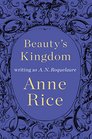
Under the pseudonym A.N. Roquelaure
- The Claiming of Sleeping Beauty (1983)
- Beauty's Punishment (1984)
- Beauty's Release (1985)
Uncited references
- Rice, Anne (2005), "Author's Note" in Out of Egypt, Alfred A. Knopf, New York. ISBN 0-375-41201-8
- Rice, Anne (2008), A Spiritual Confession, Alfred A. Knopf, New York. ISBN 978-0-307-268-27-3
This author page uses material from the Wikipedia article "Anne Rice", which is released under the Creative Commons Attribution-Share-Alike License 3.0
Total Books: 712



By using this Web site, you confirm that you have read, understood, and agreed to be bound by the Terms of Use. As an Amazon Associate we earn from qualifying purchases.
US Patent Number 7,877,315 | Copyright © 2004 - 2024 PaperBackSwap.com. All Rights Reserved.
US Patent Number 7,877,315 | Copyright © 2004 - 2024 PaperBackSwap.com. All Rights Reserved.

Loading...
Thank you for your patience